Why Coaching is at the Heart of CPD at Weavers Academy Next Year
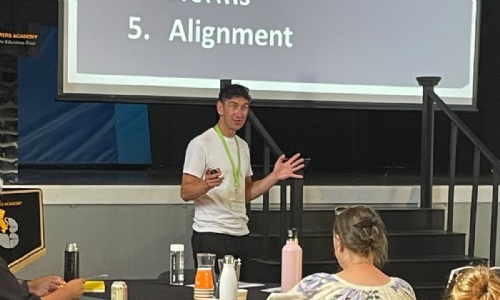
Next year, professional development at Weavers Academy will be driven by one simple but powerful idea: every teacher deserves high-quality coaching. As part of our ongoing commitment to excellence in teaching and learning, all CPD will focus on instructional coaching, led by our Quality of Education team. Every coach has already completed a full day of specialist training in preparation for this ambitious and exciting shift.
What Is Instructional Coaching?
Instructional Coaching is a research-based, personalised model of professional development that helps educators refine their teaching practices through focused, paired support. Unlike traditional training sessions, coaching provides bespoke feedback and encourages reflective practice, leading to sustainable growth and lasting impact in the classroom.
So why coaching?
The answer lies not only in what works, but in what matters. As education expert and Ambition Institute founder Peps McCrea explains, “Coaching is really helpful because it allows you to receive very individualised, personalised recommendations to help you get better. And the same is absolutely true in teaching… coaching can allow a teacher to get really specific and individualised feedback that can help them to improve.”
Rather than a one-size-fits-all model, coaching allows CPD to meet teachers where they are. One teacher might be working on refining their questioning; another might want to strengthen their modelling or classroom routines. Coaching recognises that effective teaching is complex—and improvement requires support that is just as nuanced. In Peps’ words, “Teaching is a bit more like trying to get better at music or sports—it’s quite a performance profession.”
At Weavers, our coaching model reflects the three “essential ingredients” that research shows make professional development truly effective:
- Focusing on one small change at a time
- Providing clear models of what great looks like
- Practising—outside the classroom—with targeted feedback
This means teachers won’t be overwhelmed by trying to change everything at once. Instead, they will be supported to rehearse one specific aspect of practice, often outside of the busy classroom, before bringing it to life with pupils. As Peps puts it: “If you try to change your questioning, behaviour management, how you stand and how you use your voice, nothing will end up actually changing at all.”
One of the most important components of this process is feedback. Without it, teachers can’t always see where to improve—or how close they are to achieving it. “Feedback allows us to correct teachers, to get them to a really good place rather than just an OK place,” Peps says. “It works really well with practice and rehearsal… it means that they gradually get a little bit better quite quickly, to the point that they get very good very quickly.”
Empowering Weavers Staff
Of course, implementing a coaching model takes commitment. Time must be protected, coaches trained, and a culture of trust cultivated. That’s why Weavers Academy has invested in training for all coaches and dedicated strategic leadership to this initiative through the Quality of Education team. We are determined to ensure every member of staff gets the support—and the challenge—they need to thrive.
Recently, members of our Weavers staff participated in specialised training on Instructional Coaching. This marks a significant step in our journey toward even more responsive, adaptive teaching practices. The training equipped staff with the tools to give and receive targeted feedback, plan effective instructional strategies, and foster a collaborative, trust-based coaching culture.

Head of Social Science, Louise Pickering said, “Instructional coaching is hot in schools right now, and for very good reason! It allows teachers a psychologically safe space to reflect on their own teaching practice with the support of a coach. Teachers will benefit from having another pair of eyes in the room and then having a fortnightly coaching session to work with this feedback to hone their craft. Both teachers and students set to benefit from this CPD because when the quality of teaching improves, so does the quality of learning.”
Looking Ahead
Principal, Jon Hunt said ‘at Weavers, we believe that great teaching is never static—it evolves through reflection, support, and purposeful growth. By embracing Instructional Coaching, we’re not only investing in our educators but in the futures of every student who walks through our doors.
Ultimately, the shift to coaching-based CPD is about more than just professional development. It’s about culture. As Peps reminds us, “If we don’t rehearse then it becomes very hard to change our habits in the classroom… Leaders need to show the way, to go first.” At Weavers Academy, that’s exactly what we’re doing: leading by example, investing in our staff, and putting coaching at the heart of our professional growth.
As we look to September, there’s a shared sense of excitement and responsibility—because when our staff thrive, our students do too. Together, we’re shaping a culture where professional development is not a tick box, but a catalyst for excellence, equity, and the best possible life chances for all.
Because when our teachers improve, our students benefit most.