English Studies
Subject Leader: Lois Aziz
Curriculum Intent
At Weavers Academy, our English Department wants every child to enjoy learning and feel confident in reading, writing and speaking. We aim to create a welcoming and stimulating environment where students learn to think critically, read widely, and communicate clearly. We value creativity, empathy and understanding, and we celebrate diversity in everything we do.
Our curriculum follows the Creative Education Trust framework and supports our school values: PRIDE – Productivity, Respect, Independence, Determination and Engagement. This means we encourage students to work hard, respect themselves and others, take responsibility for their learning, keep going when things are challenging, and actively participate in all lessons and activities.
We also prepare students for life beyond school by helping them develop important skills like teamwork, problem-solving and leadership. Our curriculum is designed to ensure all students can access and thrive.
What Your Child Will Learn:
- Reading: Students read a wide range of texts, from classic novels to modern writing, poetry and non-fiction.
- Writing: They learn to write clearly and creatively for different purposes, improving spelling, grammar and style.
- Speaking and Listening: We build confidence through discussions, debates and presentations.
- Cultural Experiences: Trips to the theatre, creative writing competitions and other enrichment activities help students enjoy English and understand its importance in the wider world.
By the End of Each Stage:
Students will:
- Show strong reading, writing and speaking skills.
- Think critically and appreciate different viewpoints.
- Be ready for the next stage of education or work.
- Understand how English connects to real life and future careers.
Key Stage 3:
Students build strong foundations in reading, writing and speaking. They study a variety of texts and learn to analyse language and structure. Writing tasks include stories, descriptions and non fictional pieces. Speaking skills are developed through discussion and debate. Trips and competitions add excitement and cultural knowledge.
Curriculum Map:
| Autumn | Spring | Summer | ||||
|---|---|---|---|---|---|---|
| Year 7 |
Literature: 19th Gothic Reading
Language: 19th century Detective Stories |
Literature: Shakespearian Men and Women Language: Representations of men and women: 20th and 21st centuries |
Literature: Identity Poetry
Language: Voices of the Future |
|||
| Assessments | Reading | Creative Writing | Transactional Writing | Reading | Poetry | Transactional Writing |
| Year 8 |
Literature: A Monster Calls
Language: Creative Writing |
Literature: Romeo and Juliet
Language: Transactional Writing |
Literature: Jekyll and Hyde
Language: Crime and Punishment |
|||
| Assessments | Reading | Creative Writing | Transactional Writing | Reading | Poetry | Transactional Writing |
| Year 9 |
Literature: Jane Eyre and Romantic Poetry
Language: Creative Writing |
Literature: Hamlet
Language: Transactional Writing |
Literature: Noughts and Crosses
Language: Rights, Protest and Justice |
|||
| Reading | Creative Writing | Transactional Writing | Reading | Poetry | Transactional Writing | |
Key Stage 4:
Students study English Language and Literature in depth, including set texts for GCSE. They learn to write with precision and develop strong analytical skills. Speaking and listening activities prepare them for presentations and exams. Enrichment continues with links to culture and ethics.
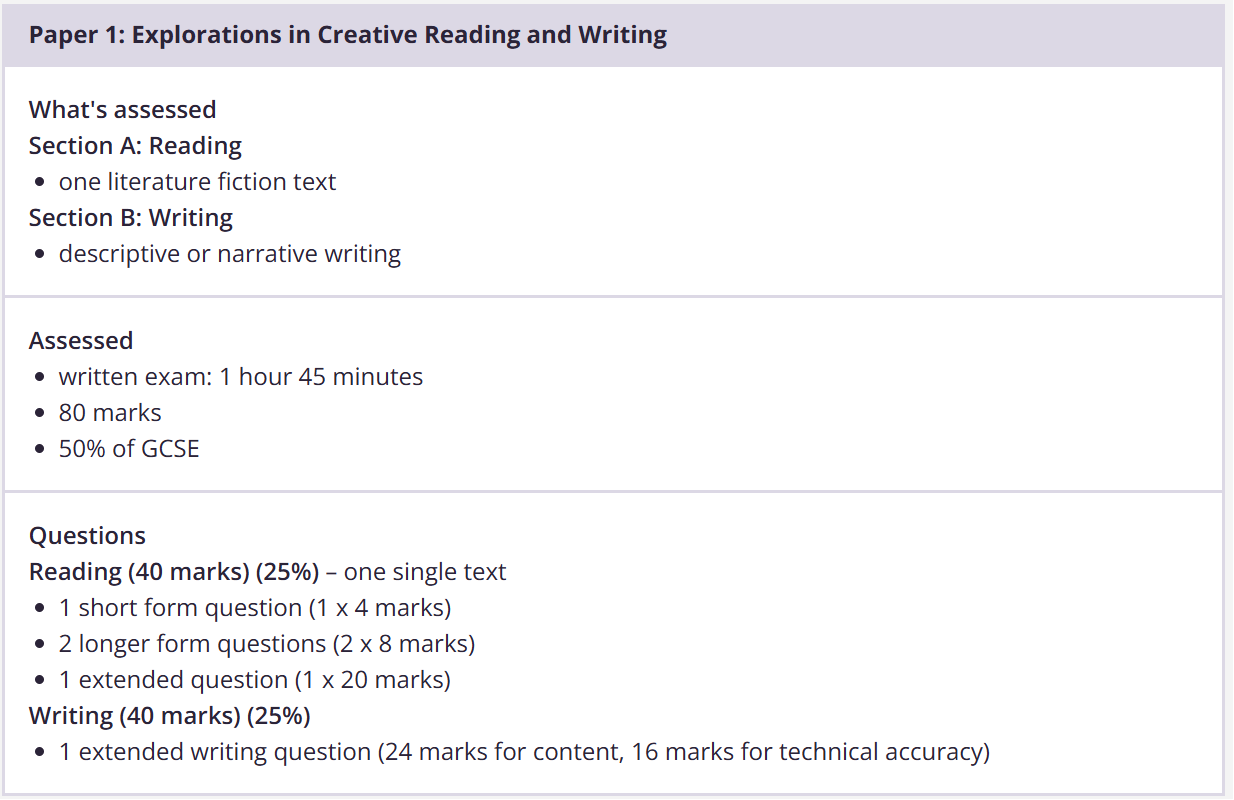
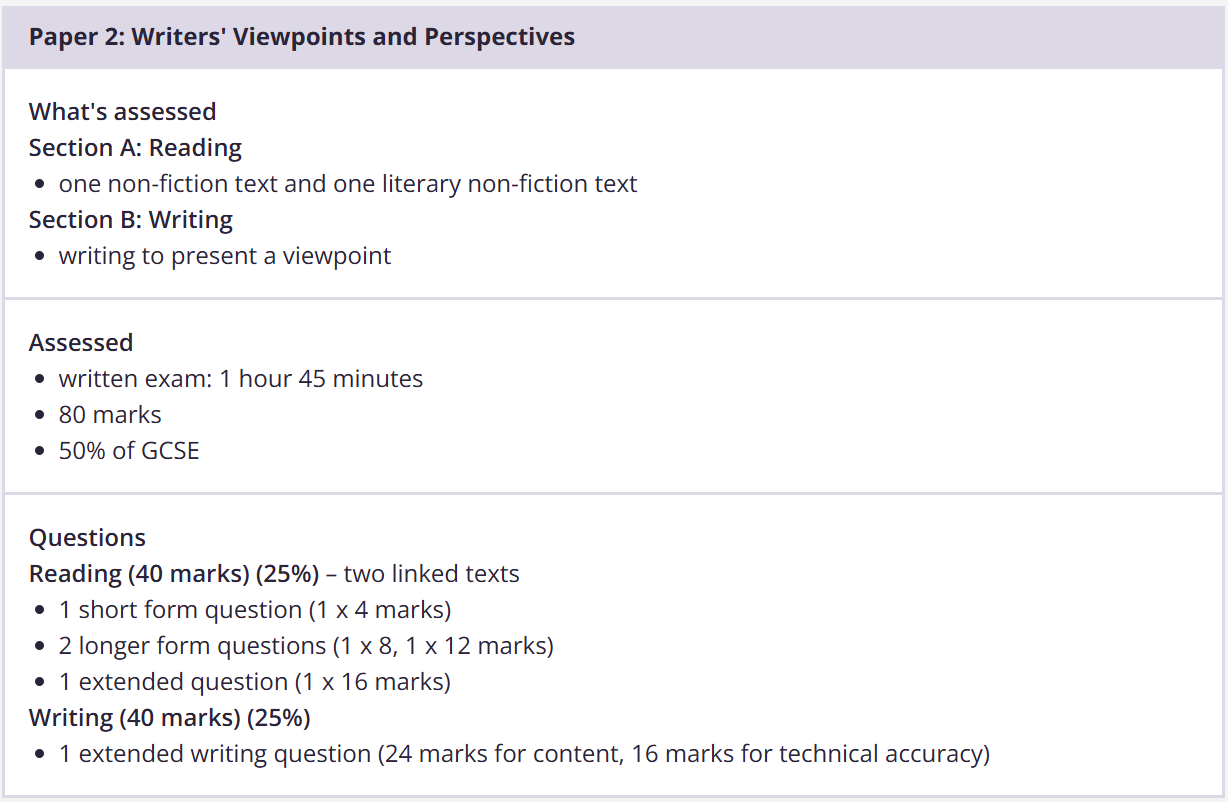
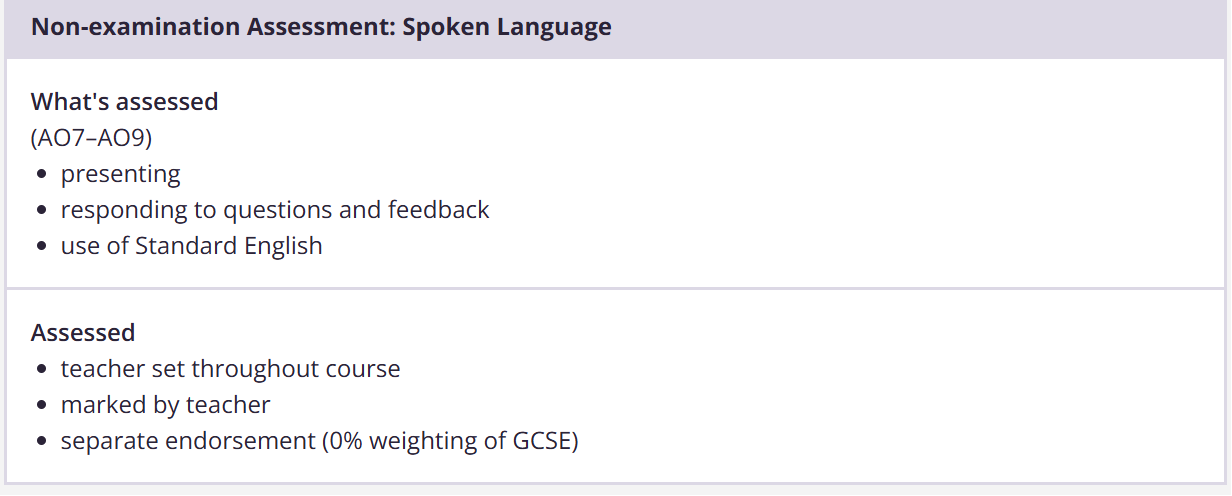
AQA GCSE English Language
Specification 8700 at a glance: GCSE English 8700 | Specification | AQA
Subject content:
- 1 Explorations in creative reading and writing
- 2 Writers’ viewpoints and perspectives
- 3 Non-exam assessment
Assessment:
For the award of the GCSE in English Language students must offer all three assessments.
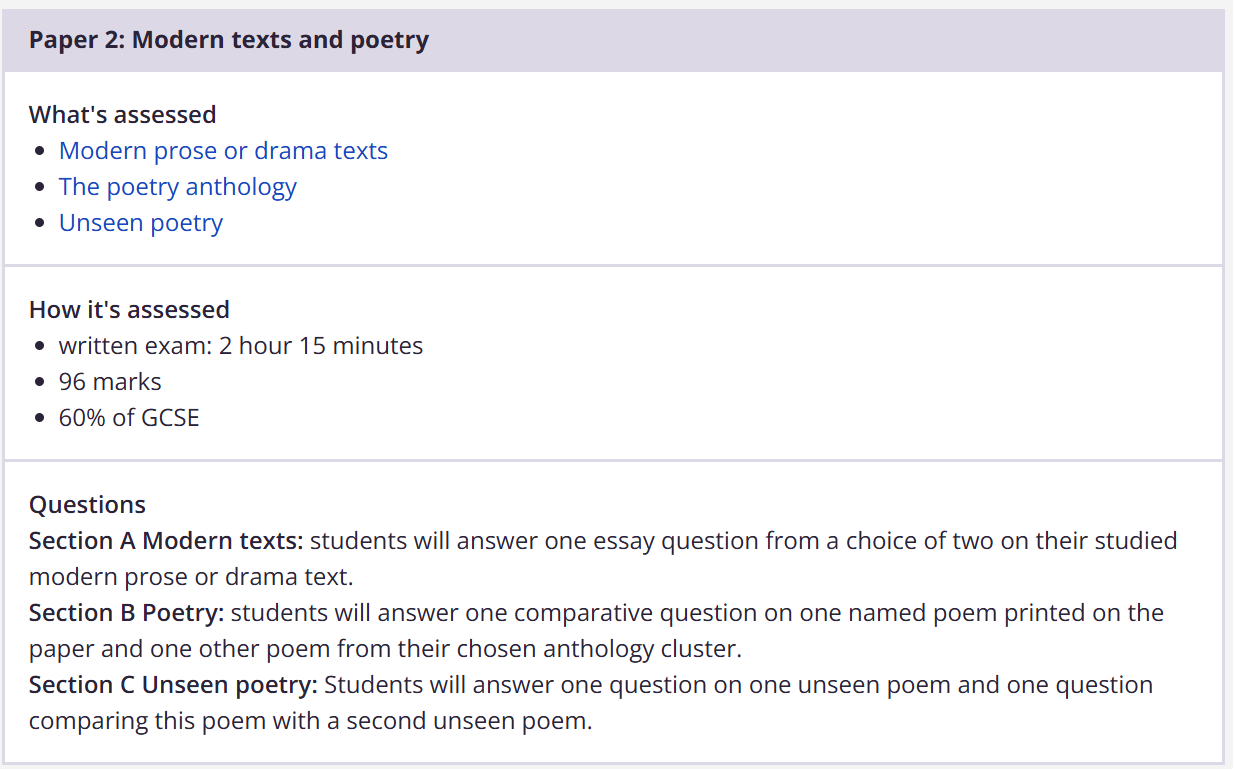
AQA GCSE Literature
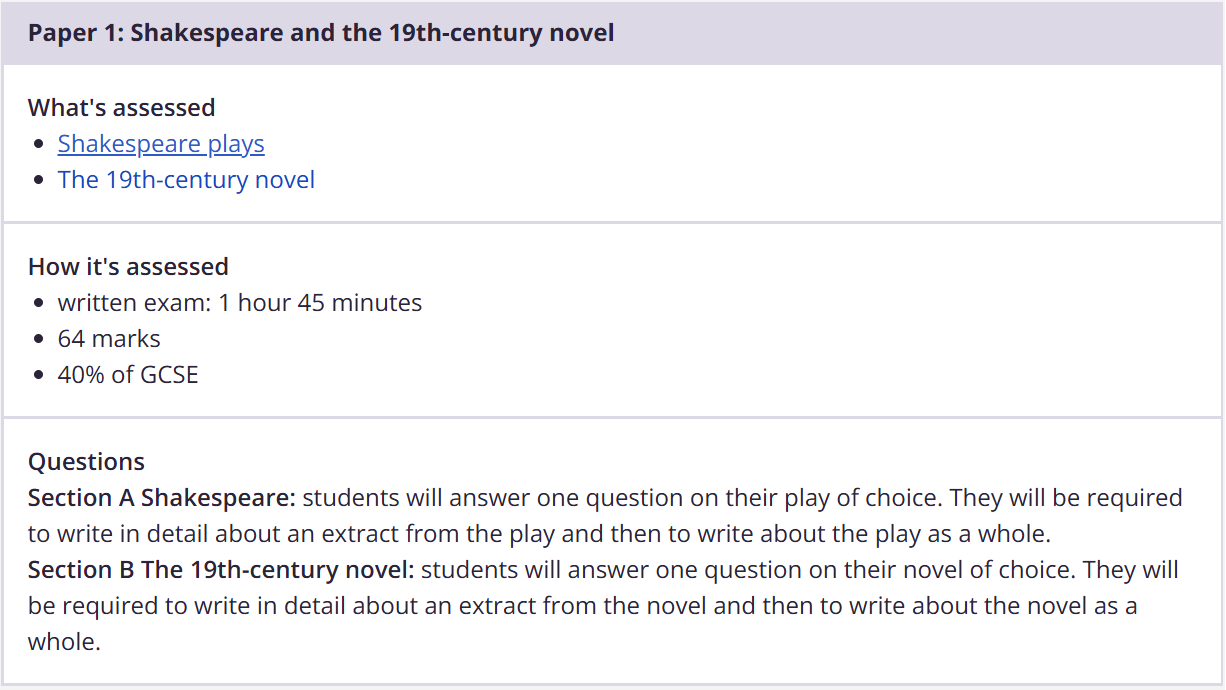
Specification 8702 at a glance: GCSE English 8702 | Specification | AQA
Assessments:
All assessments are closed book: any stimulus materials required will be provided as part of the assessment. All assessments are compulsory.
Curriculum Map:
| Autumn | Spring | Summer | ||||
|---|---|---|---|---|---|---|
| Year 10 |
Literature: An Inspector Calls/A Christmas Carol
Language: Spoken Language |
Literature: Macbeth
Language: Explorations in Creative Reading and Writing (GCSE Language Paper 1) |
Literature: Poetry Power and Conflict and Unseen)
Language: Writers Viewpoints and Perspectives (GCSE Language Paper 2) |
|||
| Assessments | Spoken Language Endorsement | Literature Knowledge Quizzes | GCSE Language Paper 1 | Macbeth Knowledge Quiz | Poetry Assessments (Unseen) |
Language Paper 1 PPE Literature Paper 2 PPE |
| Year 11 |
GCSE English Language Paper 1 revision GCSE English Literature Paper 1 revision |
GCSE English Language Paper 2 revision GCSE English Literature Paper 2 revision |
Exams |
|||
Key Stage 5:
Students explore advanced ideas in literature and language, developing independence and research skills. They prepare for university or careers through extended writing and critical thinking. Opportunities include mentoring younger students, leadership roles and cultural trips.
AQA Advanced Level English Language and Literature
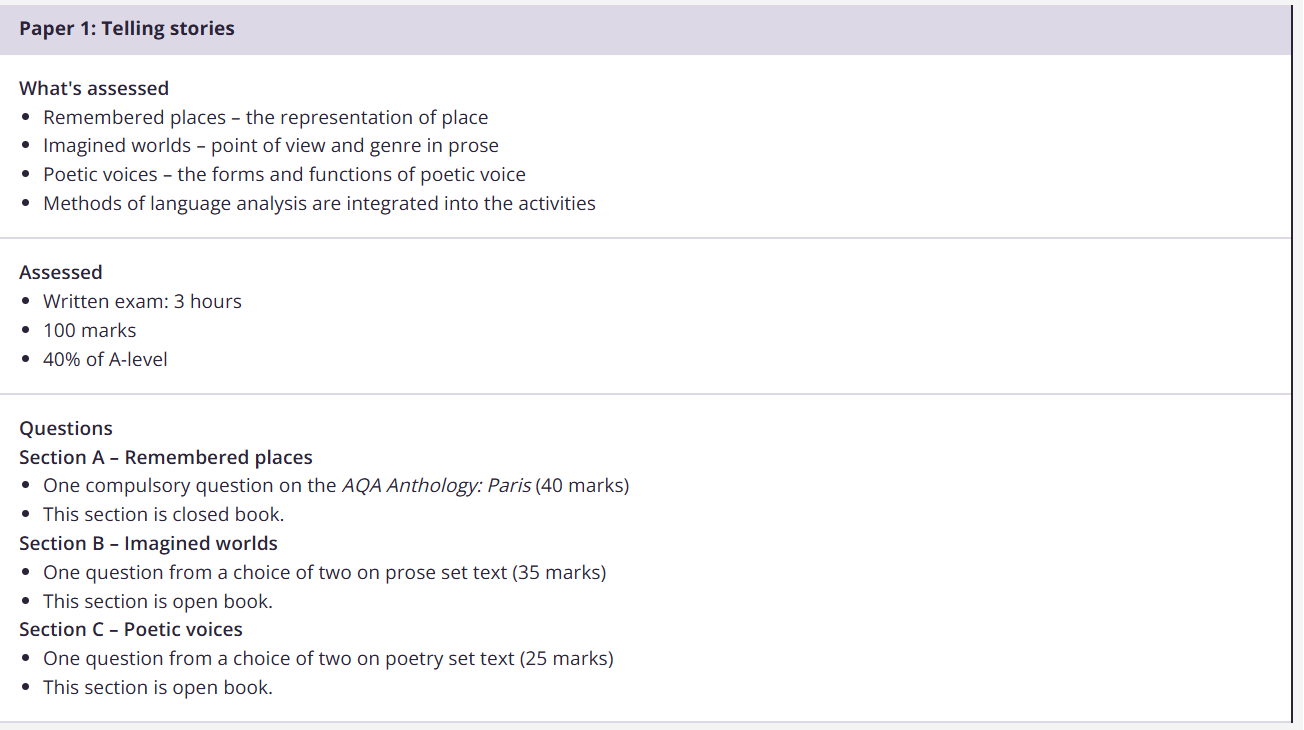
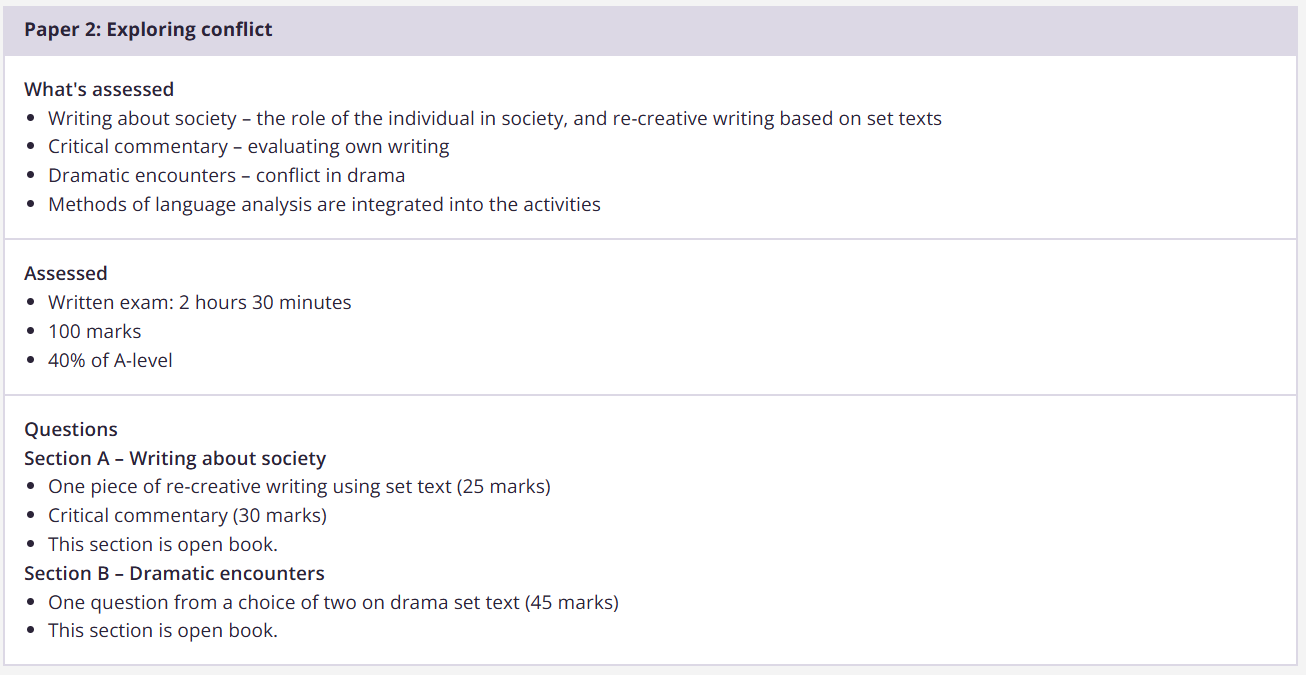
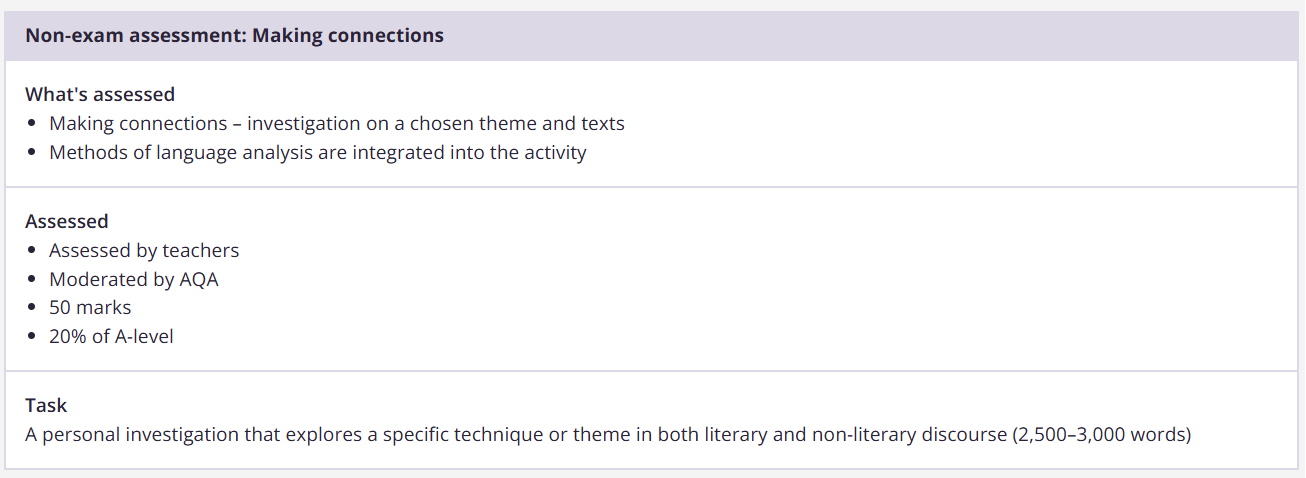
Specification 7707 at a glance: A-level English 7707 | Specification | Specification At A Glance | AQA
This qualification is linear. Linear means that students will sit all exams at the end of their course.
Subject content:
3.1.2 Remembered places
3.1.3 Imagined worlds
3.1.4 Poetic voices
3.2.2 Writing about society
3.2.3 Critical commentary
3.2.4 Dramatic encounters
3.3 Making connections
Methods of language analysis underpin each component:
Component 1 – 3.1.1 Methods of language analysis
Component 2 – 3.2.1 Methods of language analysis
Component 3 – 3.3.1 Methods of language analysis
Assessment:
Curriculum Map:
| Autumn | Spring | Summer | |
|---|---|---|---|
| Year 12 |
Paris Anthology – non fiction
The Great Gatsby |
Streetcar Named Desire
Frankenstein |
NEA
Duffy Poetry |
| Year 13 |
NEA/ Duffy Poetry
Paper 1 Revision |
Paper 2 Revision
Exam preparation |
Exam |